
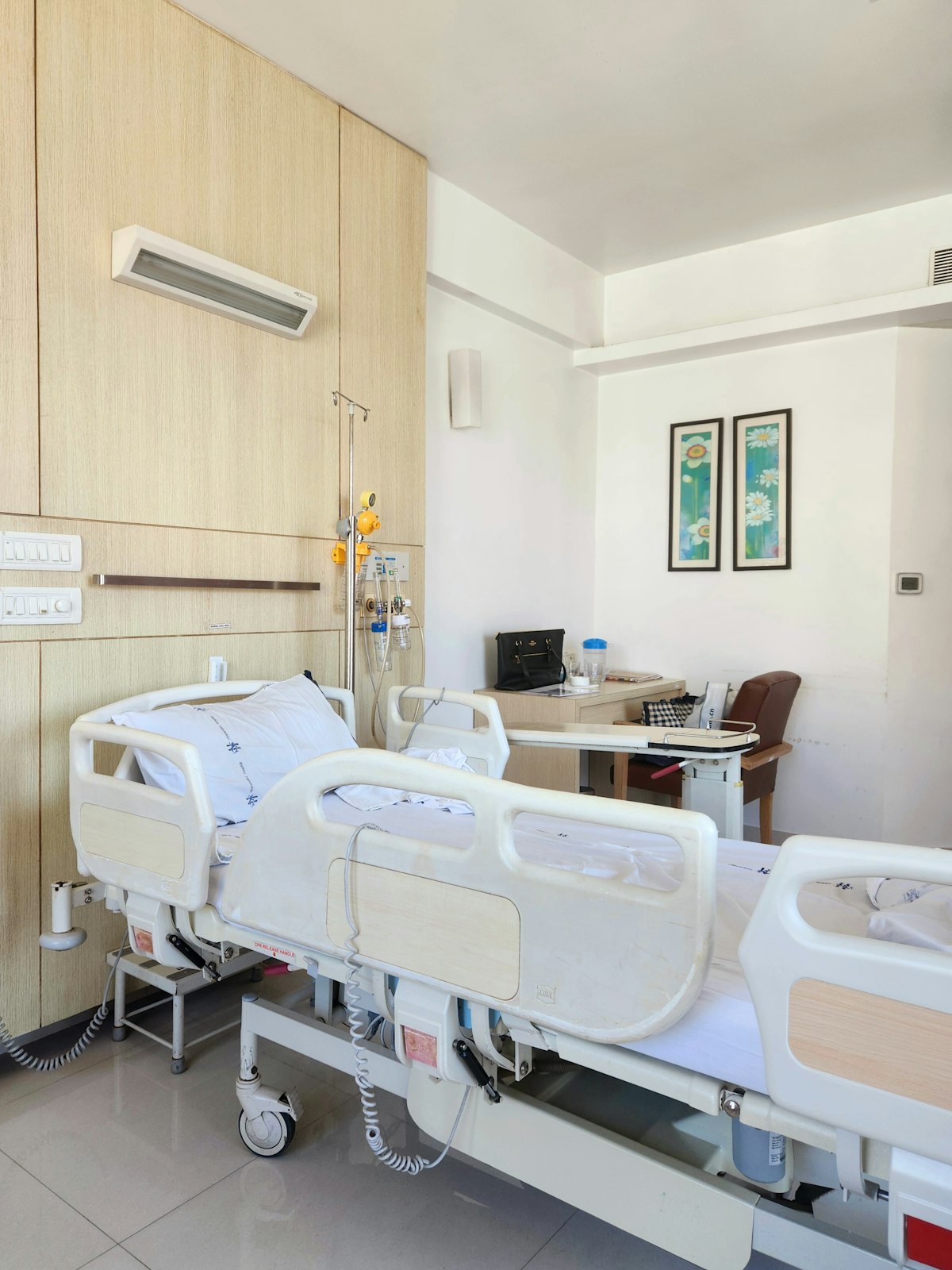
Cataract surgery at Divyajyoti Eye Hospital in Andheri West is a day-care procedure: the clouded natural lens is removed by phacoemulsification through a small, usually stitch-free incision, an intraocular lens takes its place, and you go home the same evening. There is no need to wait for a cataract to become "ripe"; surgery is advised once the clouding gets in the way of daily life. This guide covers the symptoms, the operation, the lens choice, recovery over the first month, and how cashless mediclaim works here.
Symptoms that suggest a cataract
A cataract is the clouding of the natural lens inside the eye. It comes on slowly and painlessly, so it is often mistaken for ordinary ageing or an out-of-date prescription. Common signs:
- Slow, painless blurring that new glasses no longer fix
- Glare and haloes around headlights and street lights at night
- Colours looking faded, washed out or yellow
- Needing your prescription changed more often than before
- Double vision in one eye that persists with the other eye closed
Several of these also occur in other conditions, so the visit establishes what is actually causing the change.
When surgery is advised, and when waiting is fine
The idea that a cataract must "mature" before it can be operated belongs to an earlier era of surgery. With phacoemulsification the test is functional: is the cataract stopping you doing something you need to do? Surgery is usually advised when glare has made night driving unsafe, when reading or work is difficult despite an updated prescription, or when the cataract is dense enough to obstruct examination of the retina, which matters particularly with diabetes.
Waiting is reasonable when the cataract is early and your vision still serves you; a review at your next check-up is enough. What is not advisable is indefinite postponement, because a cataract left for years becomes hard and dense, making surgery more demanding and recovery slower. Your surgeon will advise after examining you.
How phacoemulsification works, step by step
- The eye is numbed with drops or a local anaesthetic; you stay awake and comfortable.
- A small, self-sealing incision is made at the edge of the cornea, so stitches are usually not required.
- A circular opening is made in the front of the capsule, the thin clear bag holding the natural lens.
- An ultrasonic probe breaks the clouded lens into fine fragments and aspirates them at the same time. This is the phacoemulsification step.
- The capsule is cleaned and left in place to seat the implant.
- The folded intraocular lens is inserted through the same incision and unfolds inside the capsule, where it stays permanently. The seal is checked, drops are instilled and the eye is shielded.
This is done in operation theatres maintained to NABH sterility guidelines; Divyajyoti Eye Hospital is NABH Pre-Accredited.
Choosing an intraocular lens: the honest trade-offs
Monofocal
Focused at one distance, usually far. Distance vision is typically clean and predictable and you wear reading glasses for near work. It is the most predictable option and the one most insurance policies are built around.
Toric
For eyes with significant corneal astigmatism. Correcting it alongside the cataract can give sharper uncorrected distance vision than a monofocal would in the same eye, but the lens must sit at a precise orientation, so measurement matters even more.
Multifocal and extended depth of focus
These split or stretch the light so near, intermediate and distance vision are all usable, reducing dependence on glasses. The trade-off is optical: some people notice haloes or starbursts at night, and contrast in dim light may be less crisp. Many adapt within weeks; some do not, which is worth discussing before surgery.
No single lens suits everybody; your surgeon will advise after examining your eye.
Getting the measurements right
The power of the implant is calculated for your eye beforehand. At Divyajyoti this uses the IOLMaster 500, an optical biometer that measures the eye without touching it. Where a cataract is too dense for that optical reading, an ultrasound A-scan is used instead to obtain the axial length. These measurements, more than the surgery itself, determine the final result. If you wear contact lenses you will be asked to leave them out beforehand, since they temporarily change corneal shape and distort the readings.
Recovery over the first month
Day of surgery
Expect the eye to feel gritty or watery and the vision hazy. A shield or dark glasses protect it, and most people go home within a few hours and rest for the day.
Days one to seven
Vision usually begins clearing over two to three days. Drops run on a fixed schedule and the schedule matters, so set alarms. Keep the eye dry, do not rub it, skip eye make-up, and avoid bending sharply, heavy lifting and dusty or smoky places. Light reading and television are fine; a follow-up visit falls in this window.
Weeks two to four
Comfort and clarity keep improving and most routine activity resumes, with your surgeon guiding when you can return to work, drive, swim or travel. Glasses are usually prescribed only once the eye has stabilised, commonly around the fourth week, because measuring earlier gives a number that will change. Mild dryness, occasional glare and slight fluctuation are common now and usually settle.
Cost, cashless mediclaim and TPA paperwork
Cost varies with the lens chosen and with what your policy covers, so an estimate follows your examination. [TODO: client to confirm price range]
Divyajyoti Eye Hospital offers cashless hospitalisation and is empanelled with major TPAs and insurance companies. The usual sequence:
- You are examined, surgery is advised and the lens type is decided.
- Reception raises a pre-authorisation request with your TPA or insurer.
- The insurer approves, queries or rejects. Queries are common and usually concern documentation, not the surgery.
- On approval you sign the cashless forms on the day of surgery and settle only what your policy does not cover.
Documents usually needed:
- Insurance or TPA card, or the policy number
- Photo identity and address proof
- Corporate policy details, if cover comes through your employer
- Previous prescriptions and earlier eye records
Pre-authorisation is not instant, so bring papers to the OPD early rather than on the morning of surgery. Insurers differ; check with reception on +91-7777018301.
When to call us urgently after surgery
Some symptoms should never wait for the next appointment. Call the same day if you notice:
- Pain that is increasing rather than settling, or not relieved by your medication
- A sudden drop in vision after it had started clearing
- Worsening redness, or any discharge
- New floaters, flashes of light, or a shadow moving across your vision
- Increasing lid swelling, or fever alongside eye symptoms
- Any knock or injury to the operated eye
Divyajyoti Eye Hospital handles eye emergencies including ocular trauma, sudden vision loss and chemical injury.
Visiting us in Andheri West
Divyajyoti Eye Hospital, Jyoti Apartment, Ground Floor, Opposite 7 Bungalows Bus Depot, J.P. Road, Andheri (West), Mumbai 400053. The OPD runs Monday to Saturday, 5:00 PM to 8:30 PM; the hospital is closed on Sunday. Call +91-7777018301 or +91-88505 65588, or email skbulchandani@gmail.com. Serving Andheri and the western suburbs since December 2001, the hospital has cared for more than 1,00,000 patients.